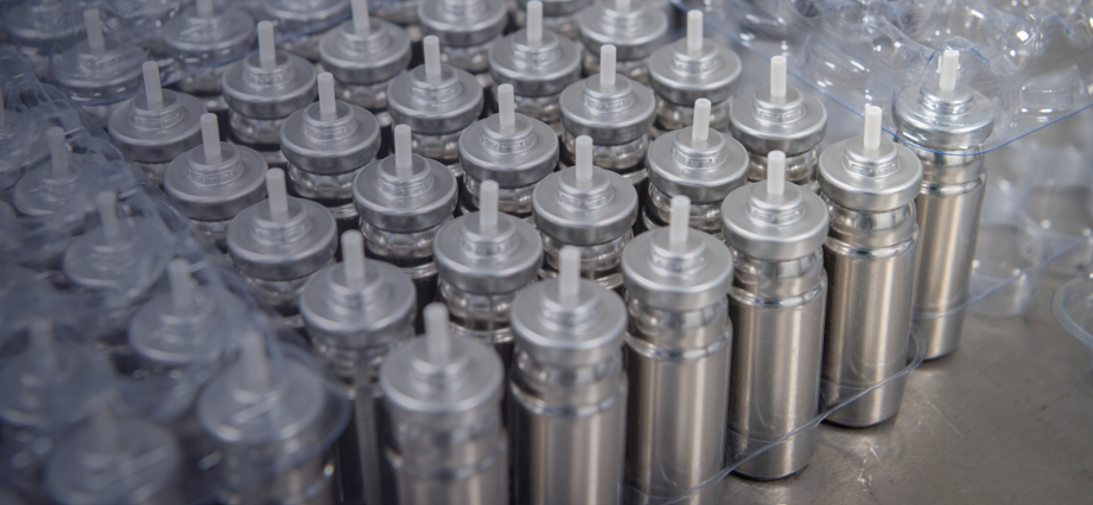
This article is part of Orbia’s Megatrendsetters blog series, which explores how Orbia’s solutions are driving the transformative forces, or “megatrends” that are advancing our society, from decarbonization and the circular economy to shifting supply chains and agribusiness to global water and digitalization. Learn more about our medical propellants.
As regulatory pressure accelerates and the phase‑down of high‑global‑warming‑potential inhaler medical propellants moves from policy to execution, pharmaceutical companies and investors are looking closely at which solutions are safe, sustainable and truly ready to scale. For Orbia Fluor & Energy Materials, Zephex® 152a represents a critical next step in the future of inhaled medicines — and 2026 marks an important year in that journey.
Following the recent approval of Orbia’s Drug Master File in the U.S. and the ramp‑up of its dedicated, commercial-scale manufacturing plant in the U.K., momentum around Zephex® 152a continues to build. In this Megatrendsetters Q&A, Sheryl Johnson, Application Development Manager for Orbia Fluor & Energy Material’s pharma business unit, and Chris Dodd, Global Regulatory Manager for Zephex® products, detail how the transition to Zephex® 152a is unfolding globally.

Why did Orbia Fluor & Energy Materials decide to create a new propellant when Zephex® 134a already serves a large proportion of the market?
Sheryl: Zephex® 134a, the original propellant we developed over 30 years ago, has been a reliable, high‑performing propellant for decades and remains the most broadly used medical propellant in the world today. However, the gas used to aerosolize and propel medication into the lungs has a high global warming potential (GWP).
For Orbia F&EM, developing a low‑GWP alternative was about planning ahead. We began our work to develop a more sustainable propellant over two decades ago, knowing that it would be important both for our long-term climate goals as well as to help our customers meet ever-evolving regulations. HFA 152a emerged as the strongest candidate because it offered a significant reduction in environmental impact while maintaining the performance and safety standards required for inhaled medicines.
What problem is Zephex® 152a solving for pharmaceutical companies and patients today?
Sheryl: For pharmaceutical companies, Zephex® 152a provides a practical way to reduce emissions associated with pressurized metered dose inhalers (pMDIs) — which are often one of the largest contributors of pharma companies’ Scope 3 footprint — without requiring a complete shift to alternative medicines like dry powder inhalers. For most pharma companies, propellants represent one of the largest contributors to their carbon footprint. Moving from a high‑GWP propellant to Zephex® 152a can reduce the impact of the propellant emissions by around 90 percent, which translates into a meaningful reduction in overall Scope 3 emissions. For example, transitioning to Zephex 152a® will allow GSK to eliminate nearly 50% of its overall emissions and allow Chiesi to reach net zero emissions by 2035.
For patients, the benefit is continuity of care. Not every patient can effectively use dry powder inhalers, which rely on the user’s own breathing strength to draw medicine into the lungs. It can be particularly difficult for young children, older adults or people experiencing severe respiratory distress. Zephex® 152a enables pharma companies to continue offering propellant driven inhalers, which remain essential medicines, while significantly improving the sustainability profile.
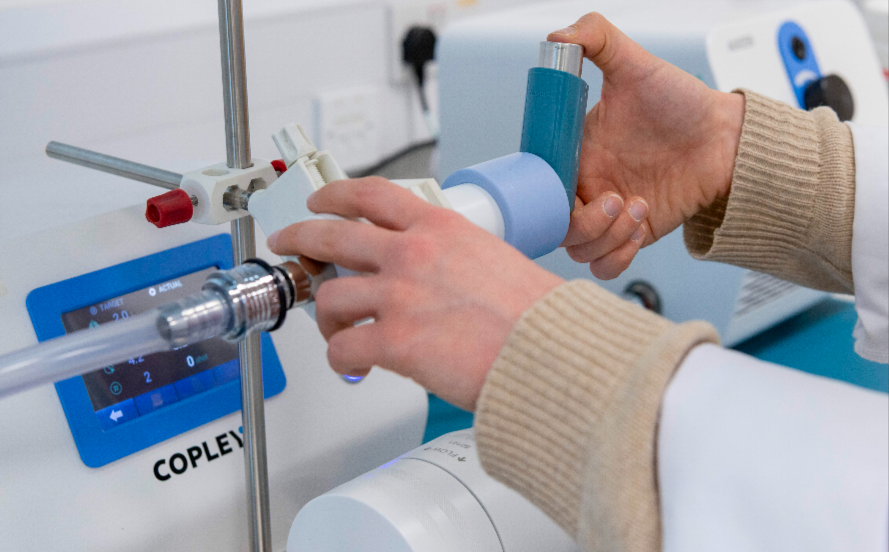 An Orbia analyst carrys out delivered dose unity to ensure a standard and safe patient experience
Where does Zephex 152a® currently stand with regulatory approvals?
Chris: Momentum is building quickly. In the U.S., Orbia’s Drug Master File for Zephex® 152a was recently accepted, which allows customers to reference our full toxicology, manufacturing and quality data in their regulatory submissions. We’re working with customers to ensure it’s easy to submit new or amended registrations for their inhalers to transition to Zephex® 152a and allow them to secure alignment from the FDA early. Customers bringing 152a formulations to the U.S. market are now well positioned to complete their reformulation processes, advance through clinical trials and ultimately obtain approval for commercial rollout. We expect to start seeing Zephex® 152a in commercially available inhalers in the U.S. by 2030.
In contrast, in the U.K. and Europe, several large pharmaceutical companies, including GSK and Chiesi, and manufactures like Kindeva and Bespak, have already committed to Zephex® 152a. We completed the first bulk commercial shipment in October 2025 and broader commercial availability is anticipated within the second half of 2026 timed with the opening of a new a large, commercial-scale production facility at Orbia F&EM’s Rocksavage site in the U.K. Once operational, the facility will provide large-scale production capacity sufficient to support the market as inhalers transition to Zephex® 152a, ensuring continuity of supply as adoption expands.
Beyond the U.S. and Europe, we are working to ensure Zephex® 152a can be used by our customers in Australia, China and India and supporting our customers through the regulatory approval process globally.
 An analyst tests pMDI using NGI to assess API aerosol behavior and determine APSD, MMAD and FPF.
What is the timeline for F‑gas regulations and the phase‑down process?
Chris: F‑gas regulations apply broadly across refrigerants and medical propellants, with significant reductions already underway. In Europe and the U.K., allowable emissions are scheduled to decrease sharply by 2030, with a long‑term goal of net‑zero by 2050. Metered dose inhalers were previously exempt, but that exemption has now been lifted. The U.S. also has similar regulations introduced under the EPA to phase down hydrofluorocarbon (HFC) production and consumption of 85% by 2036.
As a result, pharmaceutical companies must lower the global warming potential of pMDIs, making the transition to low‑GWP propellants not only desirable but necessary.
How does Zephex® 152a compare with current and next‑generation propellants in development?
Sheryl: Compared with current commercially available propellants such as Zephex® 134a and Zephex® 227ea, Zephex® 152a delivers an approximate 90% reduction in global warming potential. For an industry managing millions of inhalers globally, this level of reduction represents a significant decrease in the carbon footprint of inhalers. Moreover, when considering the full life cycle of the inhaler, it is now comparable to dry powder inhalers which don’t use propellants but use more plastic than pMDIs.
In addition, Zephex® 152a offers strong formulation versatility. It performs well across both solution and suspension formulations and can reduce the amount of non-active ingredients needed to deliver the drug successfully. Other next‑generation propellants being developed may offer slightly lower GWP in some cases but have more formulation limitations. Our goal was to support the broadest possible range of existing inhaler platforms by providing a propellant to enable a smooth formulation transition.
Chris: From a regulatory perspective, it was also important for us to ensure the new propellant behaves as closely as possible to existing ones. Health authorities want continuity for patients and safety is the utmost priority. Zephex® 152a allows existing medicines to transition forward without changing how patients experience or depend on them.
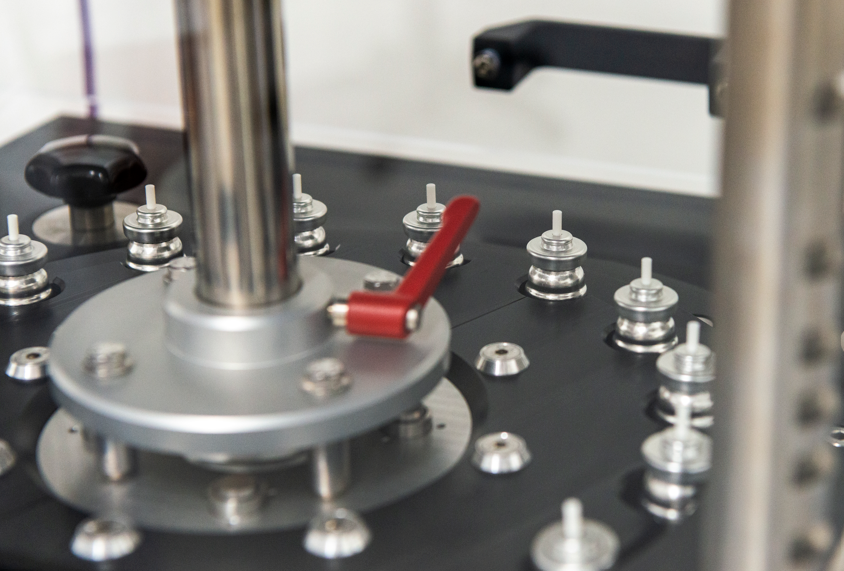 A semi-automated check-weigher, which allows a 100% check that all MDI units are filled to the correct specification. Any out of specification MDI unts are automatically rejected.
What else should Orbia’s customers and partners know?
Sheryl: At the end of the day, not only our focus, but that of our customers, is on the patient. We’re in the business of ensuring lifesaving medication reaches patients around the world. To facilitate achieving this, its critical we help our customers improve the sustainability of inhalers with a smooth transition to Zephex® 152a while maintaining a reliable supply of Zephex® 134a. This ensures business continuity and, most importantly, uninterrupted patient treatment.