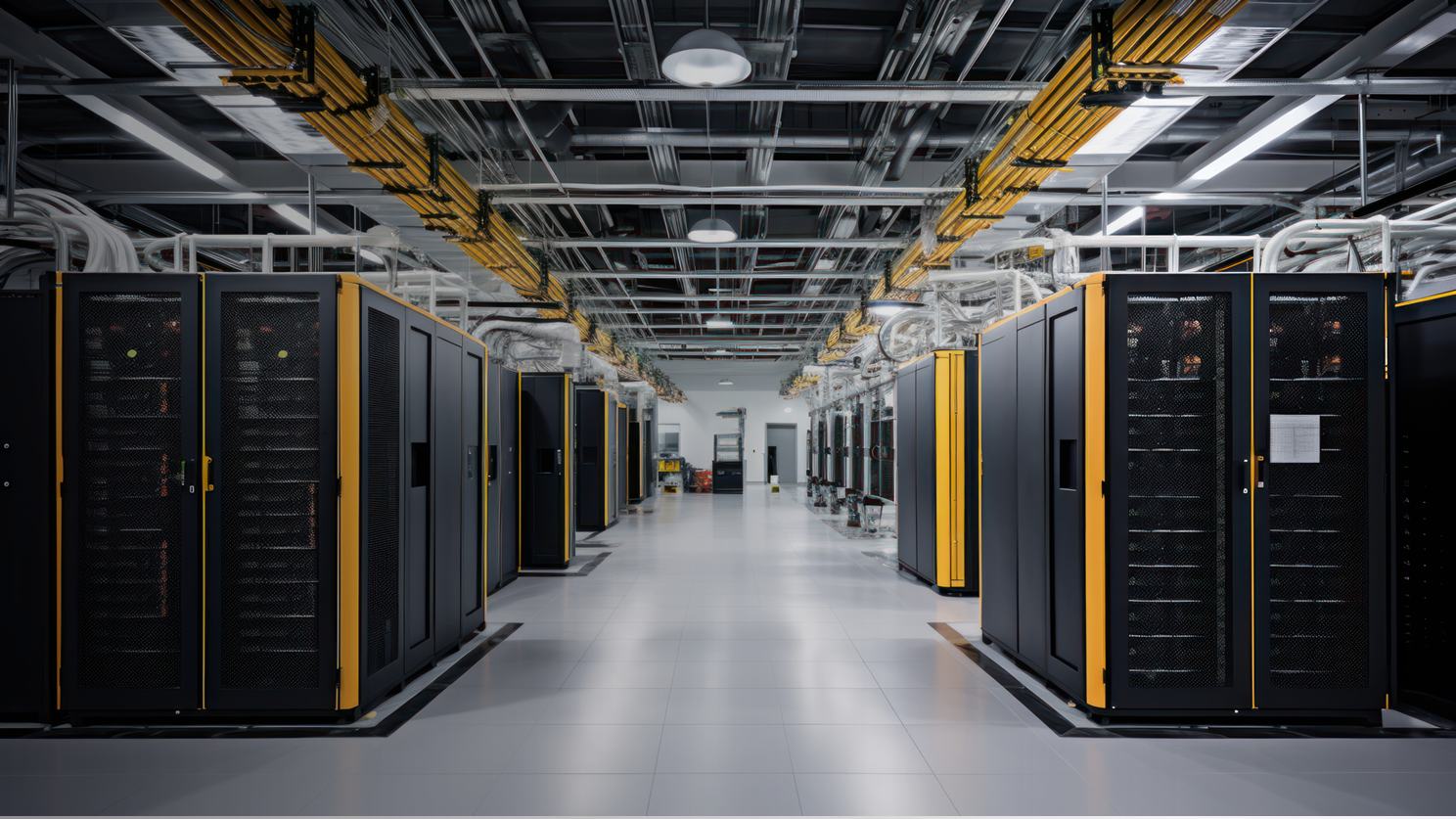
This article is part of Orbia’s Megatrendsetters blog series, which explores how Orbia’s solutions are driving the transformative forces, or “megatrends” that are advancing our society, from decarbonization and the circular economy to shifting supply chains and agribusiness to global water and digitalization.
Global data center capacity is projected to nearly double between 2026 and 2030, driven largely by AI demand.
Meeting that growth requires more than building new facilities. It requires the infrastructure that connects them and the materials that ensure they operate safely and reliably at scale. Orbia plays a dual role in supporting this growth: Orbia Polymer Solutions (Alphagary) designs flexible, fire-resistant compounds for cable jackets and Orbia Connectivity Solutions (Dura-Line) builds HDPE conduit pathways that connect data centers.
Together, these capabilities position Orbia to support one of the fastest-growing infrastructure markets in the world.
Inside the Data Center: Supporting Safer Cable Performance
Inside a data center, dense cabling, confined spaces and increasing power demands place greater pressure on performance and safety. Orbia’s Polymer Solutions business Alphagary addresses these challenges through specialized wire and cable compounds.
“Our partnerships with all the major cable manufacturers for data centers have been there for over a decade. When the data center revolution happened a few years ago, we were already in the center of that technology.” – Santiago Urbina, VP and General Manager, Orbia Polymer Solutions Alphagary
Materials meet both U.S. and European fire safety standards
Orbia Alphagary’s portfolio is unique within the industry. Rather than a single material approach, engineers can select from PVC-based or halogen-free based compounds depending on the applicable fire safety standard.
- SMOKEGUARD compounds support plenum (floor or ceiling) and riser (walls and vertical shaft) applications and meet U.S. NFPA 262 requirements for low smoke and flame spread
- GW series compounds meet U.S. standards for riser cable applications
- MEGOLON compounds provide halogen-free, low toxicity solutions for European CPR classifications and enhanced fire performance to meet U.S. NEC riser standards
Solving design and operational challenges
As data center infrastructure scales, manufacturers are asking to increase the fiber in each cable, reduce wall thickness and run faster production lines—all without compromising performance or flame retardancy compliance.
Orbia Alphagary works closely with customers to meet these evolving requirements. Its teams coordinate directly with customer engineering groups to evaluate specifications, recommend material solutions and fine-tune formulations. In some cases, existing products are adapted to meet each cable’s exact needs. In others, entirely new compounds are developed.
This partnership continues through testing and validation. Orbia Alphagary’s R&D centers support customers by identifying the root causes of material-related performance issues in failed cables—such as moisture or material inconsistencies—and working closely with independent testing agencies to determine how material performance contributes to cable failures.
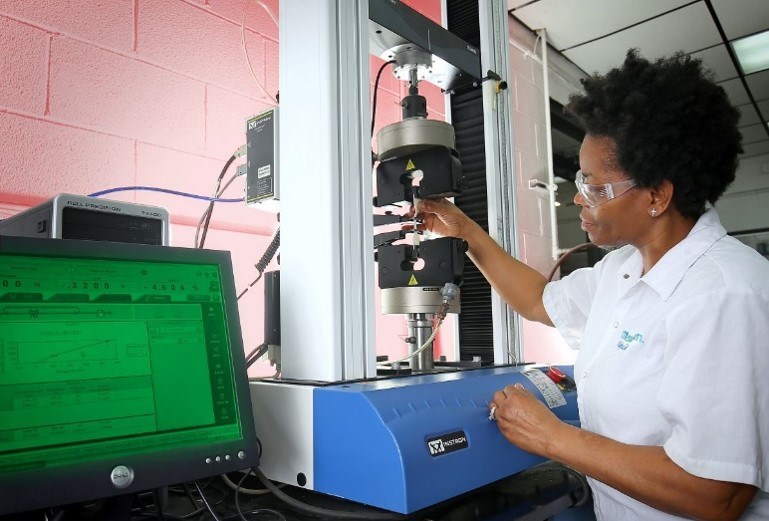
Orbia Alphagary’s Leominster quality lab which can help identify the cause of cable failures
Ramping capacity and innovation
To meet accelerating demand, Orbia Alphagary is increasing production capacity and flexibility across its manufacturing network. This includes ramping output at the newly expanded Pineville facility, which will add 12,000 tons of capacity per year, and retrofitting existing lines to support data center compounds, expected to increase capacity by 200% when complete. A new production line in Mexico planned to begin construction in 2028 will support the continued growth trajectory of the industry.
These efforts are expected to significantly increase overall capacity, enabling Orbia Alphagary to support continued growth while advancing next-generation materials. Customer demand is already shifting toward thinner cables and compounds that can be used across both indoor and outdoor environments, driving ongoing innovation across the portfolio.
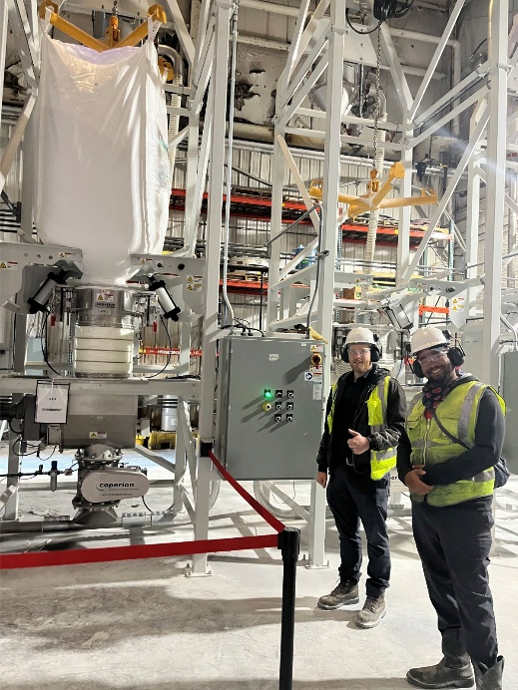 The Orbia Alphagary Pineville plant is expected to reach full capacity in Q3 2026
Outside the Data Center: Building Connection and Infrastructure Backbone
Beyond the walls of the data center, the challenge shifts to connectivity—linking facilities to each other, often across vast distances while leaving room for future growth. In the next five years, operators are expected to build over 90,000 new route miles to support data center connectivity.
Orbia’s Connectivity Solutions business Dura-Line plays a critical role in this buildout, working with every major hyperscaler to deliver high-performance conduit systems that support long-haul, metro and on-campus deployments. Already, Orbia Dura-Line has completed more than 10,000 miles of conduit installations across major routes in North America, from Seattle to Chicago and Denver to Phoenix. That footprint continues to expand with more than 70 builds under development.
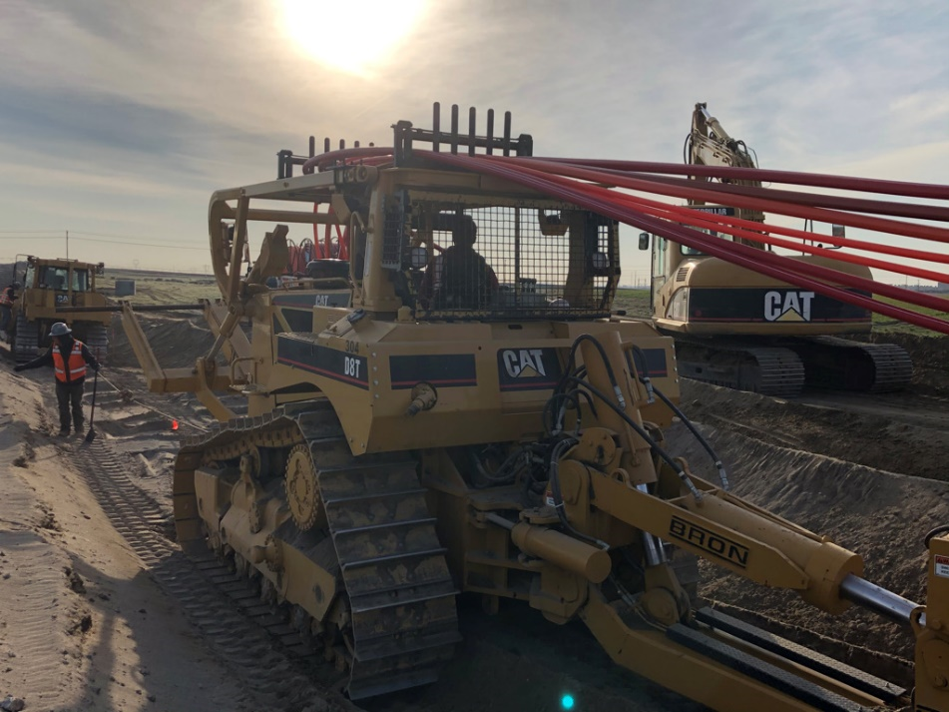 Orbia Dura-Line conduit connects cities across thousands of miles
Supporting growth today and tomorrow
Orbia Dura-Line’s two main product lines for data centers, FuturePath and Smoothwall, are designed to accommodate different cable configurations, allowing operators to optimize builds based on their specific requirements.
FuturePath accommodates multiple cables and operators within a single conduit system, creating built-in capacity for future expansion. This flexibility allows data center operators to scale over time without significant disruption.
“The growth of data centers has exploded our core business at a magnitude we've never seen before. Data centers are funding builds between cities and it’s reducing the build costs for other companies who they’re partnering with for construction. Think of it like a tree, where the trunk is data centers building a fiber pathway out to their campus for their needs. That makes it much easier for companies like AT&T or Verizon to then build branches out to other cities or communities to bring internet to underserved areas.” – Jesse Martin, Global Director of Hyperscale, Orbia Connectivity Solutions Dura-Line
Embedding sustainability from the start
Orbia Dura-Line partners closely with customers to reduce their Scope 2 and 3 emissions while minimizing environmental impact. Its HDPE conduit can be installed via trenchless methods like MicroTrenching and directional drilling which cause less environmental disruption than traditional open trenching. It also offers conduit engineered to be connected by mechanical couplers, eliminating the need for glues.
Moreover, Orbia Dura-Line reworks scrap HDPE from its own manufacturing processes into new conduit, diverting millions of pounds of material from landfill and reducing the carbon footprint of its products. In addition, approximately half of its conduit reels are recovered through a reel return program, with more than 115,000 reels repurposed in 2025 alone.
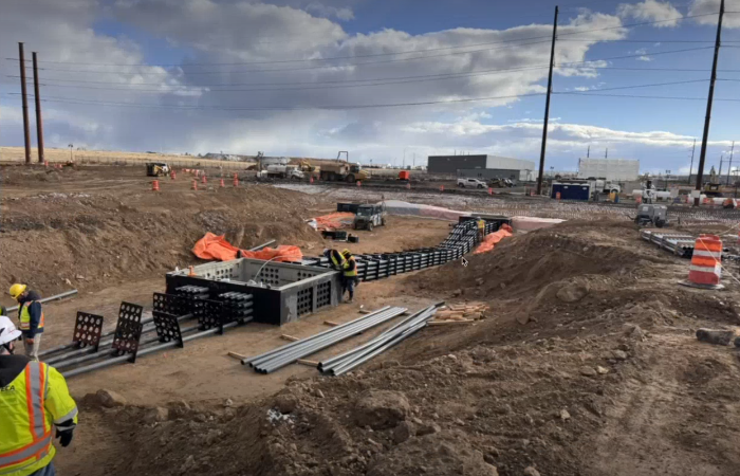 Mechanical couplers are a more environmentally friendly option for data center builds
A partner in system design and talent development
Orbia Dura-Line is more than a vendor to its customers, acting as advisor and helping guide system design and conduit selection based on project requirements globally. This partnership extends into workforce development, ensuring customers have technicians with the knowledge and skill to deploy and maintain complex fiber networks.
Through Dura-Line Academy, the business offers more than 65 technical training courses covering topics such as splicing FuturePath and connecting MicroDuct systems. Curriculums can be tailored to customer needs or developed in partnership to align with a customer’s individual standards and onboarding processes.
Two Businesses, One Customer Outcome
In some applications, Orbia’s capabilities intersect directly. For example, Orbia Dura-Line uses Orbia Alphagary’s Megolon compounds in conduit applications requiring fire-retardant performance, such as enterprise networks, multi-dwelling units and underground transit tunnels.
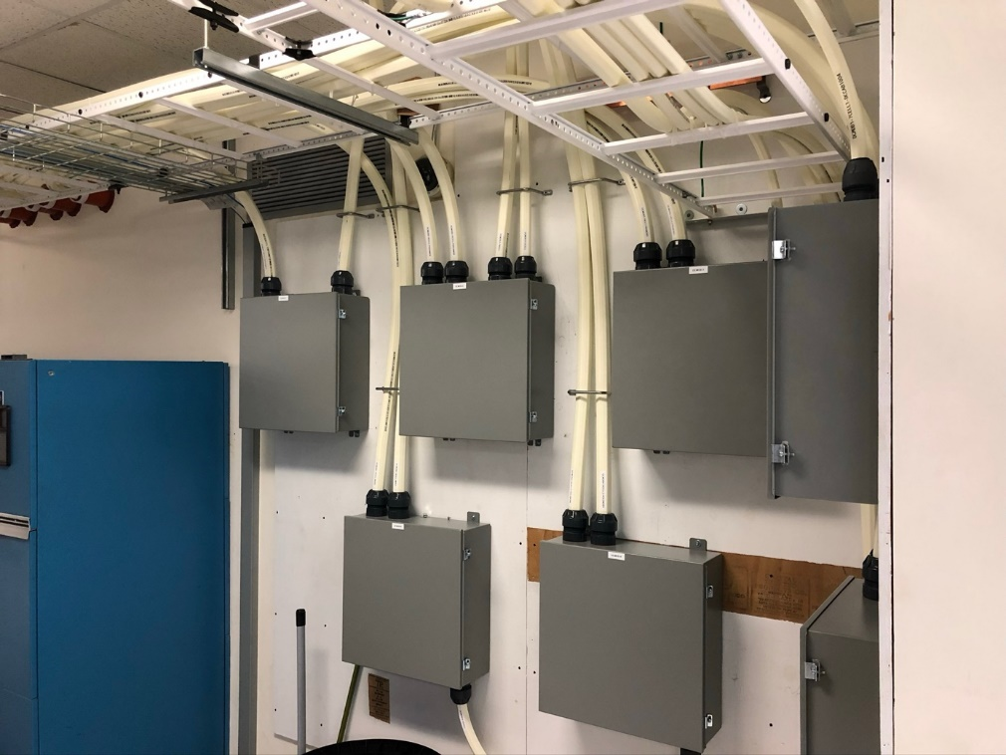 An enterprise build using Orbia Dura-Line fire retardant conduit with Alphagary fire retardant cable jacketing
Both businesses are experiencing strong growth driven by increasing data center demand. Orbia Alphagary’s data center business has more than doubled in the last three years and is expected to double again by 2028. Meanwhile, Orbia Dura-Line’s data center business has grown 4x over in the last five years and projects 20% annual growth over the next five years.
While the U.S. remains the primary market for data center products, both businesses are also seeing increasing demand globally. Orbia Alphagary is currently supplying global customers in countries including Mexico, Poland, Japan and Morocco while Orbia Dura-Line is working on projects totaling more than 500 miles of builds in Europe, India, Australia and Malaysia.
This combination of material innovation and infrastructure expertise enables Orbia to support data center development at multiple points across the value chain. The next generation of data center infrastructure will be safer and more flexible, meeting the demands of an ever more connected world.